One Verse at Dawn
The suprabhatam tradition begins with a scene from the Ramayana: a sage beside two sleeping boys, and the sky turning light over a river.
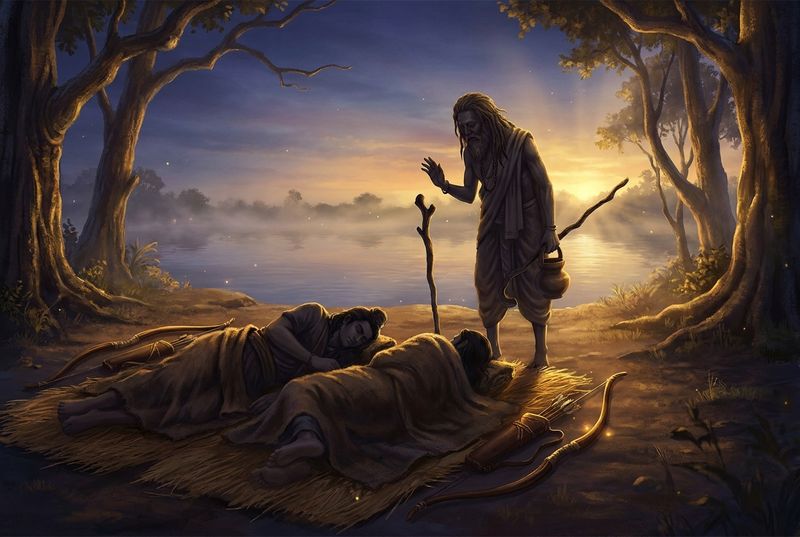
Why Rama was sleeping on grass
Early in the Bala Kanda, the first book of Valmiki's Ramayana, the sage Vishvamitra comes to King Dasharatha at Ayodhya with a request. He is performing a Vedic ritual, and two rakshasas, Maricha and Subahu, keep wrecking it by pouring flesh and blood onto the sacred fire. He asks the king to lend him his eldest son, Rama, for about ten days to guard it (sarga 19).
On the advice of his preceptor Vasishtha, Dasharatha lets both Rama and Lakshmana go (sarga 22). On the road, Vishvamitra teaches the brothers two mantras, Bala and Atibala, which the text says will keep fatigue, fever, hunger and thirst away. That night the three stop on the bank of the Sarayu, and the princes of Ayodhya sleep on beds of grass.
The verse
The next sarga opens as that night ends. Vishvamitra speaks to the sleeping brothers (sarga 23, verses 1–2):
kausalyā suprajā rāma pūrvā sandhyā pravartate
uttiṣṭha naraśārdūla kartavyaṃ daivam āhnikam
In plain English: "Rama, blessed son of Kausalya, the eastern dawn is breaking. Rise, tiger among men; the day's duties to the gods are waiting."
The brothers rise, bathe, offer water, meditate on the Gayatri and present themselves to their teacher, ready for the road. The episode takes two lines, and nothing in the epic marks it as special.
From one verse to a morning hymn
What turned this line into a tradition was later devotion, not the epic. The suprabhatam form, hymns sung at dawn to wake a deity, is traced back to this verse.
The best-known example was composed at Tirumala between about 1420 and 1432 by Prativadi Bhayankaram Annan, a disciple of Manavala Mamuni. His Venkatesa Suprabhatam keeps Valmiki's verse as its opening and continues with his own stanzas, in four parts: the waking verses, a hymn of praise, an act of surrender (prapatti) and a closing benediction (mangalasasanam).
For a long time it remained a recitation at the Tirumala shrine. Then M. S. Subbulakshmi's rendition, recorded and broadcast on All India Radio in 1958, carried it into homes; it became one of the largest-selling non-film records in India. Suprabhatams have since been composed for many deities, from Ganesha and Kamakshi to Lakshmi Narasimha.
The verse turned around
There is a reversal hidden in the borrowing. In the Ramayana, a teacher wakes a sleeping prince to his duty. In the temple, the devotees wake the Lord. A form born from words that called Rama to his morning prayers now calls the deity, at Yadagirigutta Lakshmi Narasimha, to receive them.
For Vaishnava devotion the step is short. Rama and Narasimha are both avatars of Vishnu, so a hymn form born in Rama's story sits naturally in a Narasimha temple. The Narasimha avatar itself is told in The Narasimha Avatar: A Boon, a Pillar and a Doorway.
Tradition and record
The verse is record: anyone can open the Bala Kanda at sarga 23 and read it. The Venkatesa Suprabhatam's author and date come from its own tradition and the scholarship on it. What could not be confirmed for this article is which suprabhatam text is sung each morning at Yadagirigutta; the public sources consulted do not name it.