What is Veda Ashirvachanam
Veda Ashirvachanam is a blessing given in the words of the Vedas. Ashirvada means blessing; the word joins ashih and vada , and its sense is "may this happen". In Veda Ashirvachanam, priests learned in the Vedas chant the ancient blessing mantras over the devotee and the family.
At Sri Lakshmi Narasimha Swamy Temple, Yadagirigutta, the temple offers Veda Ashirvachanam for groups, so a whole family can be blessed together.
What devotees seek
Blessing is an old part of Hindu life, traced back through the Vedas, the epics, the Puranas and the Dharmashastras. People seek the blessing of elders before journeys and important work, and priests chant blessing mantras at the end of the great rites, above all the wedding.
A blessing wishes the fulfilment of what the one blessed desires. Above all, it wishes long life. Chiranjeevi bhava, ayushman bhava: may you live long. A married woman is blessed saubhagyavati bhava. One of the best-loved blessing verses comes from the Rig Veda:
śataṁ jīva śarado vardhamānaḥ
"Live a hundred autumns, growing."
So Veda Ashirvachanam suits the moments a family wants to mark: a birthday, a sixtieth year, a new marriage, a child's milestone, a move abroad, a new job.
What happens
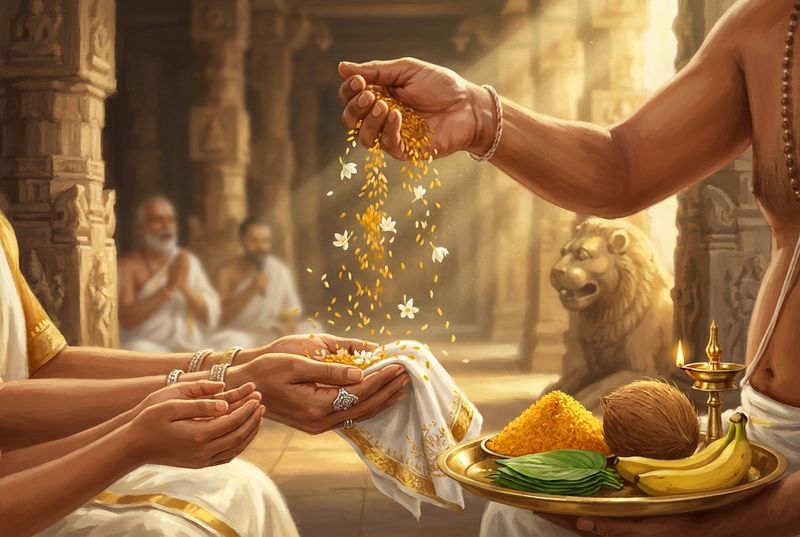
In tradition, the one to be blessed bows before the elders and the priests, and may say a short Sanskrit greeting (abhivadaye) giving their gotra and name. The priests chant the blessing mantras. Unbroken rice mixed with turmeric (akshata) is placed into a cloth held out by the one blessed, and then sprinkled on their head.
How Yadagirigutta performs the blessing, and which mantras are chanted, could not be confirmed from an official source.
A blessing for the Lord himself
The Vaishnava tradition turns blessing around. Its devotees bless the Lord, as a parent blesses a child, in the practice called mangalasasanam. The saint Periyazhwar is remembered for singing such a blessing for the Lord himself.
What you receive
When you book through VedaJyoti, you receive a recorded video of the blessing.